Card Games for Couples: 11 That Actually Work With Two
Card games for couples that really work with two, with quick rules: one-deck classics, two-player designer games, conversation decks and how to play apart.

Elena Voss
Relationship Writer
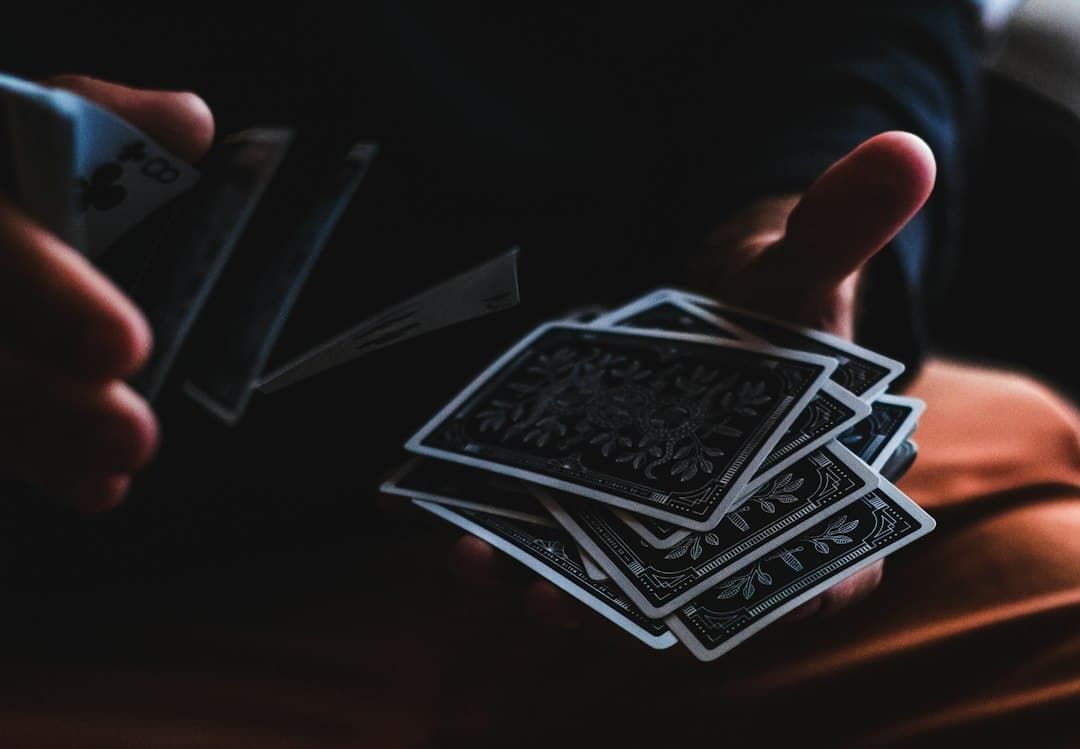
Card games for couples come in three very different kinds, and most lists mix them together. There are the classics you play with one ordinary deck, like Gin Rummy and Cribbage. There are modern card games designed for exactly two players. And there are conversation decks, which are not really games at all: each card is a question, and the "play" is talking.
They do different jobs. A game of Gin Rummy gives you something to do with your hands while you talk about your day. A conversation deck makes the talking the whole point. Pick the wrong kind and the night feels off, even if the game is good.
This guide sorts them by what you want from the evening, gives you quick-start rules for the classics that work with two, shows you how to turn the deck you already own into a conversation deck, and covers what to do when one of you always wins or when you are in different cities.
Table of Contents
Pick the Right Kind of Card Game for Tonight
Start with the evening, not the game. The question is whether you want the cards to be the focus or the background.
| Tonight you want... | Play | Time | What you need |
|---|---|---|---|
| Something to do while you chat | Gin Rummy, Cribbage | 20 to 45 min | One deck (and a board for Cribbage) |
| A quiet game you can play half-asleep | German Whist | 10 to 20 min | One deck |
| Noise, speed and a little chaos | Speed | 3 to 10 min a deal | One deck |
| A real strategy duel | Lost Cities, Jaipur, The Fox in the Forest | 10 to 30 min | The boxed game, or a free online table |
| To be on the same team | The Mind | 15 to 20 min | The boxed game |
| A long conversation | A conversation deck | 30 to 60 min | A boxed deck, an app, or the DIY deck below |
| Both: a game and a conversation | Question Gin (below) | 30 to 45 min | One deck |
One filter matters more than genre. If either of you is tired, avoid anything that punishes a lapse in attention. Speed and Cribbage both reward focus. German Whist and conversation decks forgive a wandering mind. If the night is more about staying in than about the game, our date night ideas at home has more quiet options.
Classic Card Games for Couples With One Standard Deck
The trap with "classic" card games is that the famous ones are built for four. Spades is, in the words of the card-game reference site Pagat, "most often played as a partnership game by four players", and Bridge is a four-player partnership game too. You can play them as a couple, but only with a two-player adaptation that changes how the cards are dealt. Without one, half the deck sits idle and the game loses most of its point.
The games below either were designed for two or have a well-established two-player form.
Gin Rummy
The default two-player card game, and for good reason. It is easy enough to learn in one hand and deep enough to keep playing for years.
- Deal 10 cards each. Turn the next card face up to start the discard pile; the rest is the stock.
- On your turn, take the top card from the stock or the discard pile, then discard one card.
- You are trying to arrange your hand into sets (three or four of a rank) and runs (three or more in sequence in one suit).
- Unmatched cards are "deadwood." Face cards count 10, aces count 1. When your deadwood totals 10 or less, you can knock and end the hand.
- Knocking with zero deadwood is going gin, which earns a bonus.
The full scoring, including the undercut rule that punishes knocking too early, is on Pagat's Gin Rummy page. The standard game runs to 100 points, which takes a while. For a weeknight, play to 50.
Cribbage
Slower and more conversational than Gin. The two-player game deals six cards each, you each discard two into a shared "crib," and points come from fifteens, pairs and runs. The first to 121 wins. Traditionally the score is kept on a board with pegs, and a board is worth buying if you will play more than once.
Cribbage has a reputation for being complicated. It mostly is not. The counting takes two or three games to click, and after that it becomes the kind of game you can play while catching up on the week.
German Whist
The best low-energy card game for two. Each player gets 13 cards, and the top card of the stock is turned face up to set trumps. In the first half, whoever wins a trick takes that face-up card and the loser draws the hidden one beneath it, so you are really bidding for the card on display. Once the stock runs out, you play your remaining 13 cards for real, and whoever takes most of those tricks wins the hand.
The rules fit in one breath, a hand is quick, and the strategy (deliberately losing a trick when the face-up card is weak) is satisfying without being taxing.
Speed
The loud option. In Speed, you each hold five cards with a personal stock behind them, and you both play at the same time onto two center piles, putting down any card one rank higher or lower than the top card. No turns. Whoever empties their cards first wins the deal.
Speed is over in minutes and almost always ends in an argument about who slapped a card down first. That is part of the fun. It is not a game for the night after a hard conversation.
Spades and Bridge for Two
If one of you grew up on Spades or Bridge, the two-player versions are worth learning. In two-player Spades there is no deal: you take turns drawing from the stock, keeping one card and discarding one, until you each hold 13. Bridge for two goes by the name Honeymoon Bridge, which covers several adaptations; the drawing version has you play 13 tricks to build your hands before bidding begins.
Both work. Both take a few hands before they feel natural.
Modern Card Games Designed for Two
Designer card games solve the problem the classics have: they were built for two people from the start, so nothing feels like a workaround. These four are widely available and easy to teach.
| Game | Players | Time | Type | Good for |
|---|---|---|---|---|
| Lost Cities (Reiner Knizia) | 2 | 10 to 30 min | Competitive | Quick push-your-luck rivalry |
| Jaipur (Sébastien Pauchon, 2009) | 2 | 10 to 30 min | Competitive | Trading, light bluffing |
| The Fox in the Forest (Joshua Buergel, 2017) | 2 | About 30 min | Competitive | Trick-taking fans |
| The Mind (Wolfgang Warsch, 2018) | 2 to 4 | 15 to 20 min | Cooperative | Couples who would rather not compete |
Lost Cities is about deciding when to commit. You build expeditions in five colors, and starting one costs you points until you have invested enough to profit. A round takes about 10 minutes once you know it, and a full game is three rounds.
Jaipur is a trading game set in a market. Grab the best goods before your partner does, and decide whether to sell early for a bonus or hold for a bigger set. It has just enough bluffing to make you watch each other's faces.
The Fox in the Forest is a trick-taking game with a twist: taking 10 or more of the 13 tricks scores nothing, while a humble 0 to 3 scores as well as a strong 7 to 9. Sometimes you have to lose on purpose. If German Whist hooked you, this is the next step.
The Mind is different. You are a team. Each round, you each hold numbered cards from 1 to 100 and must play them onto a single pile in ascending order without talking or signaling. Two players work through 12 levels. It sounds impossible, and then you find yourselves timing a card off the way the other person breathes. For couples who find competitive games tense, this is the one to try first.
If you also like board games, our wider guide to couples games covers two-player titles like Sky Team and 7 Wonders Duel.
Conversation Card Games for Couples
A conversation deck is a box of questions, usually sorted into levels that get more personal as you go. The best known is probably the We're Not Really Strangers Couples Edition: 150 questions and wildcards in three levels, for $20. The Gottman Institute publishes a free Gottman Card Decks app with 22 decks and more than 1,000 cards, drawn from their workshop materials. That one is a sensible starting point before you spend money on a boxed deck.
The questions are only half of it. How you run the deck decides whether it feels like a conversation or an interview.
Both of you answer every card. The most common way these decks fail is that one person reads and the other answers, and by the end of the night only one of you has said anything new.
Guess before you answer. Before your partner answers, say what you think they will say. It turns a question into a small game, and the misses are often better conversations than the answers. It also gives you a reason to keep a love map of your partner's inner world up to date.
Ask one follow-up before drawing the next card. In a set of studies of conversations between strangers, people who asked more questions, especially follow-up questions, were liked more by the people they talked to. Those were strangers in short chats and speed dates, not couples, so it is not proof that follow-ups improve a relationship. It is a good reason not to rush through the deck. A card that produces one good follow-up is worth more than five cards answered in a sentence each.
What the escalating levels are borrowing
Many conversation decks borrow their level structure from the "36 questions" study by Arthur Aron and colleagues. In that research, pairs of participants spent 45 minutes on self-disclosure tasks that became steadily more personal, and right afterward they reported feeling closer than pairs given comparable small-talk tasks.
That is worth knowing for two reasons. First, what the study tested was a procedure, self-disclosure that escalates over time, not a particular set of magic questions. Second, it measured closeness right after a single session between paired participants, not in established couples. A couple of five years does not need help getting from small talk to closeness. You need questions that reach the things you have not asked about in a long time, which is why a deck you play once and shelve is less useful than one you return to.
How long a deck lasts
A 150-card deck sounds endless. At five cards a night, it is 30 nights, and fewer if you skip the cards that do not fit the two of you.
That is fine. Shuffle it and play again in a year: the answers change even when the questions do not. If you want a deeper pool for free, our list of relationship questions and the formats in question games for couples will keep a deck-style night going much longer.
Turn a Standard Deck Into a Conversation Deck
You do not need to buy a conversation deck. A standard deck of 52 already has the structure one needs: four categories (suits) and a built-in depth scale (rank). Assign a topic to each suit, let the number decide how deep the question goes, and write your own questions or use the starters below.
| Suit | Topic | Low card (2 to 5) | Middle (6 to 10) | High (face cards) |
|---|---|---|---|---|
| Hearts | Us | A small moment from this month you liked | Something you have changed your mind about since we met | Something about us you want to protect |
| Diamonds | The future | A trip you would take next year | A habit you want us to have in five years | Something you are quietly afraid we will not get to |
| Clubs | The past | A meal from childhood you still think about | A person who changed how you see the world | A year you would not want to relive, and why |
| Spades | Wild card | Pick any question for your partner | Swap: you both answer the same question | Ask the thing you have been curious about for a while |
Aces are free passes. Draw one and you can skip any card later in the game, no explanation needed. A pass should never cost anything. Questions people feel trapped by produce short, safe answers.
A few house rules make it work:
- Shuffle out the face cards for a lighter night. Leave them in when you both have the energy.
- Red cards answer, black cards guess. On a black card, the person who drew it predicts the partner's answer first.
- Stop while it is still good. End the game after a great answer, not after the deck is empty.
Question Gin: a game and a conversation at once
The hybrid that works best for couples who want both. Play ordinary Gin Rummy with a second, separate deck set to one side as the question deck. Every time a hand ends, the player who lost draws from the question deck and answers.
The losing player gets to talk, which takes the sting out of losing. The game keeps your hands busy, so the conversation stays easy. And because hands end at random intervals, the questions arrive at a natural pace rather than one after another.
When One of You Always Wins
Competitive card games can quietly stop being fun when one partner is much better. The one who keeps losing stops suggesting the game, and nobody says why.
A University of Washington study of 13 long-distance couples who play digital games together found that most of the couples said they chose competitive games only when they were relatively balanced in skill; one couple said they stuck to games they were both equally familiar or unfamiliar with. That study was about video games, not cards, and it is a small qualitative sample. The instinct still transfers well: if one of you has played Cribbage since childhood, the gap is the problem, not the game.
Ways to even it out:
- Pick a game neither of you knows. Lost Cities, Jaipur and German Whist are rarely anyone's childhood game, so you start level.
- Give the stronger player a handicap. In Gin Rummy, the better player may only knock with 5 or less deadwood instead of 10. In Cribbage, the newer player starts 15 or 20 points up the board.
- Play the first few games with open hands. The experienced player explains why they would play a card. It is slower, but it closes the gap faster than losing does.
- Switch to a cooperative game. The Mind has no winner between you. You either both get through the level or you both fail it.
- Score the night, not the game. Best of three, with the loser of the night choosing the next game.
Card Games for Couples Who Are Apart
Every kind of card game can be played at a distance. The setup just changes with the kind.
Classic and designer games online. Board Game Arena runs Gin Rummy, Cribbage and German Whist free in the browser, with two-player tables you can open for each other. Lost Cities, Jaipur and The Fox in the Forest are there too, but as Premium games: one of you needs a Premium membership to open the table, and the other joins free.
For a quicker start, CardGames.io has a Multiplayer option for Gin Rummy, so you can open a private table and send your partner the link. Put a video call on in the background and it feels close to sitting across the table.
Conversation decks over video. If only one of you owns the deck, that person reads every card out loud and you both answer. The DIY deck above works even better: you each shuffle your own standard deck, draw at the same moment, and read your card aloud, so neither of you is just the audience.
When your schedules do not overlap. This is where physical cards stop working. If one of you is going to bed when the other wakes up, there is no shared hour to deal a hand. A question that waits for both answers fits better. FeelClose's daily question works like a single card dealt to both of you each day: you answer on your own time, and neither of you sees the other's answer until you have both written yours. The levels run sweet, flirty and spicy (plus a premium After Dark level), like a conversation deck's, and you only get questions from levels you have both turned on.
FeelClose also has two-player games that work like card rounds, including How Well Do You Know Me, where you answer a question and predict your partner's answer, and Would You Rather. How Well Do You Know Me is free, and so is the sweet level of Would You Rather. For more ideas built around distance, see our guide to games for couples long distance.
If You Only Try One
For a first night, get one ordinary deck and play German Whist. It takes five minutes to learn, it is quiet enough to talk over, and it costs nothing if you already have cards in a drawer. If that goes well, play Question Gin the next time, and you will have found out whether you are a game couple, a conversation couple, or both.
If you are apart, open a free table online for the game, and let the conversation half live in your pocket: download FeelClose and you will both get the same question tomorrow, wherever you are.
Stay Connected with FeelClose
The relationship app for long distance couples. Countdown to visits, send nudges, answer daily questions, play nine couple games, and raise a little pet together.
Download Free on iOSFeelClose for Android is coming soon
Get an email the day it’s on Google Play.