Green Flags in a Relationship: 20 Signs That Hold Up
Green flags in a relationship, sorted by when you can actually see them, plus the quiet ones that look like red flags and how to spot a performed one.

Elena Voss
Relationship Writer
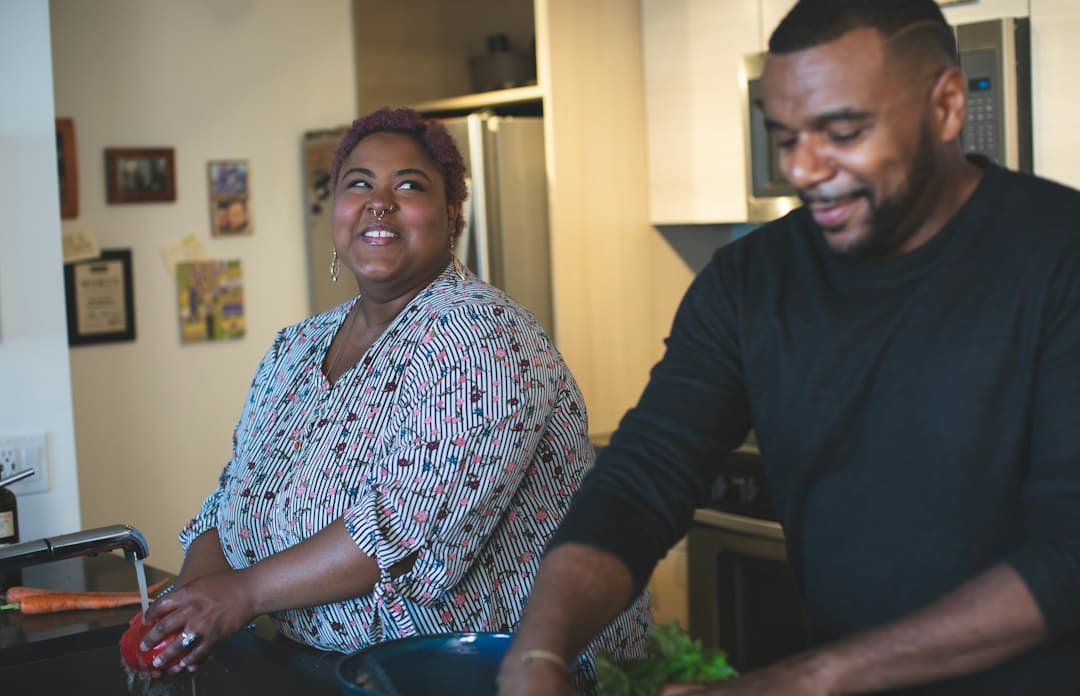
Most lists of green flags in a relationship describe a lovely person: kind, honest, a good communicator, supportive. The trouble is that almost everyone looks like that on a third date. Kindness is easy when it costs nothing.
The green flags that hold up are the ones you can only see when being decent takes some effort. When you say no. When they were wrong. When your good news lands on their bad day. When you are 4,000 miles away and they are tired.
This guide sorts 20 green flags by when you can realistically see them, covers the healthy behaviors that are easy to mistake for warning signs, shows how to tell a real green flag from a performed one, and adds the signs that only matter at a distance.
What is a green flag in a relationship? A green flag is a repeated behavior that makes it safe to be honest with your partner and shows they will put effort into the relationship even when it is inconvenient. One sweet gesture is not a green flag. A pattern that survives conflict, disappointment and bad weeks is.
Table of contents
What makes something a real green flag?
A behavior counts as a green flag when it repeats, holds up under some cost to them, and makes honesty easier rather than harder. Three quick questions help.
Does it cost them anything? Texting good morning costs very little. Accepting your no without sulking, apologizing when they would rather be right, or changing plans because you are struggling all cost something. The second kind tells you more.
Does it happen when nobody is watching? A partner who is warm in front of your friends and cold in private is managing an image. Green flags show up in the boring Tuesday version of the relationship too.
Does it survive a bad week? Anyone can be patient when life is easy. What you are looking for is someone whose basic respect stays in place when they are stressed, tired or hurt.
There is also a reason to stop treating green flags as a personality checklist. In a 2020 machine-learning study that pooled 43 longitudinal datasets covering 11,196 couples from 29 labs, the strongest relationship-specific predictors of how people rated their relationship quality were their own sense of how committed their partner was, appreciation, sexual satisfaction, how satisfied they thought their partner was, and conflict (less of it). Once those were known, the partner's own self-reported traits and ratings added no extra predictive power. The data were all self-report, and the models could barely predict who would become happier or unhappier over time. Still, the takeaway is useful: what you experience together tells you more than a list of their qualities.
20 green flags in a relationship, sorted by when you can see them
Some green flags are visible on a first date. Others need months, because they only appear after your first argument, your first bad news or your first real "no." Expecting to see all of them early is how people end up trusting a good performance.
| Stage | What you can see | What you cannot see yet |
|---|---|---|
| First few weeks | Curiosity, consistency, how they treat strangers, how they take a small no | How they fight, apologize or handle your bad days |
| First few months | First disagreement and repair, how they meet your good news, whether you meet their people | How they handle money, stress and long-term pressure |
| First year and beyond | Support in a hard season, real follow-through, how conflict feels over time | Nothing is fully visible. People keep changing. |
In the first few weeks
1. Their actions match their messages. They say they will call on Thursday, and they call on Thursday. Small promises kept are the earliest evidence you get.
2. A small no is easy. You would rather not go to that bar, or you want to leave early. They shrug and adjust. No guilt trip, no sulking, no asking five more times.
3. They ask follow-up questions. Not just "how was your day" but "wait, what did your boss say after that?" Follow-ups show they were actually listening.
4. They are kind to people who cannot do anything for them. Servers, drivers, their younger cousin, the person who got their order wrong.
5. The pace feels mutual. You are not being rushed into big declarations or plans you have not had time to want. If intensity arrives before familiarity, slow down and watch whether it holds up.
In the first few months
6. Your first real disagreement ends in repair. Not necessarily agreement. Repair. The Gottman Institute uses the term repair attempts for anything that stops a fight from escalating: a joke, a softer tone, "okay, let me start over." A partner who reaches for repair, and accepts yours, is showing one of the most important signs there is.
7. They celebrate your good news like it is good news. In a series of four studies, Gable and colleagues found that sharing positive events was linked to more positive feelings, and that the benefit was larger when people felt the listener responded actively and constructively: interested, enthusiastic, asking questions. People whose partners usually responded that way reported better relationship well-being. A partner who lights up at your promotion, instead of changing the subject or listing the downsides, is giving you that.
8. They introduce you to their people. Friends, a sibling, a roommate. Integration into each other's lives is a quiet sign that they see a future.
9. Their apologies are specific. "I'm sorry I made that joke in front of your friends" beats "sorry if you were upset." Specific apologies show they understood what happened.
10. You can tell them something embarrassing. And it does not come back as a joke at your expense later.
11. They respond to small bids for attention. You point out a funny dog, send a meme, sigh after a call. They look up, reply, ask. The Gottman Institute calls these bids: attempts to get a partner's attention, affirmation or affection. Turning toward them is tiny, and it adds up.
12. They tell you what they feel instead of making you guess. "I'm not upset with you, I'm just wiped out from work" saves you an evening of anxious mind-reading.
In the first year and beyond
13. They show up in a hard season. Illness, a job loss, grief. Not with perfect words, but with presence, food, a call at the right time.
14. They change something after you raise it. This is the green-flag mirror of the response test. You mention a pattern, and three weeks later it is actually different.
15. Conflict feels safe, even when it is uncomfortable. You can disagree without mockery, eye-rolling or name-calling. You do not rehearse what you are going to say.
16. Money is talked about openly. Debts, spending, what you each earn. Not necessarily shared, but not hidden.
17. Your own life is still intact. Your friendships, hobbies and family relationships did not shrink to make room for them.
18. They express appreciation for ordinary things. Thanks for making dinner, for the long call, for remembering. In three studies using surveys, daily diaries, lab observation and follow-up, Gordon and colleagues found that people who felt more appreciated by their partners were more appreciative in return, and that more appreciative partners reported being more responsive and committed and were more likely to still be together over time. The findings show associations, but appreciation is one green flag that seems to travel in both directions.
19. They talk about the future with details. Not just "someday," but which city, what year, how you would both handle it.
20. You feel more like yourself, not less. This one is hard to measure and easy to recognize. With the right person, you are not constantly editing.
Green flags that can look like red flags
Some healthy behaviors feel bad in the moment, especially if a past relationship taught you to read any distance as rejection. These are usually fine, and often good.
They say no to you. A partner who can decline a plan, a favor or a request is a partner whose yes means something.
They disagree with you out loud. Someone who never pushes back is either hiding their opinions or does not feel safe sharing them. Neither is great.
They ask for a break in the middle of a fight. "I need twenty minutes and then I want to finish this" is not stonewalling. Stonewalling is refusing to come back. The break plus the return is the green flag.
They do not text all day. For many couples, steady and predictable contact ends up feeling more reassuring than constant contact. Someone with a job, friends and a life of their own is a good sign, not a threat.
They have friendships you are not part of. Separate friends mean they are not relying on you for everything, which is a weight no one should carry.
They tell you about a mistake from their past. Volunteering something unflattering takes trust. It does not mean they are hiding worse.
They raise a problem early. "Hey, can we talk about how last weekend went?" can feel alarming. It is actually what keeps small issues small. If you want a structure for those conversations, a short relationship check-in helps.
They are slow to say "I love you." Some people want to know you first. Waiting until it is true is not the same as holding back.
If any of these make you anxious anyway, that is worth noticing too. Our guide to anxious attachment explains why ordinary space can feel like danger, and what helps.
Real green flags vs performed ones
Anyone can learn the vocabulary of a healthy relationship. "I value open communication." "I respect your boundaries." "I've done a lot of work on myself." The words are not the flag. What happens afterward is.
| What you hear | What the real version does |
|---|---|
| "I'm a great communicator." | Tells you when something bothers them, early, without a lecture |
| "I respect your boundaries." | Accepts a no the first time and does not relitigate it later |
| "I've been to therapy, I know my patterns." | Owns a specific mistake with you, not just in general |
| "I'm so emotionally available." | Stays in the conversation when it gets uncomfortable |
| "I'd never try to control you." | Does not need to know where you are to feel okay |
| Grand gestures in week two | Small, boring follow-through in month six |
The pattern is simple. Real green flags are mostly behavior, and they get more convincing with time. Performed ones are mostly language, and they get thinner the more you need them.
A useful habit is to separate "they said they would" from "they did." Keep it in your head, not on a spreadsheet. If the gap between the two keeps growing, believe the doing.
Green flags in a long distance relationship
Distance hides a lot. You cannot see how someone treats their roommate, how their home looks or whether their friends actually know you exist. A few green flags become much more important when you live apart.
Visits have dates, not just intentions. "We should see each other soon" is a wish. "I'm looking at flights for the 14th, does that work?" is a plan. A partner who helps book the next visit, and shares the cost or effort in a way that feels fair to both of you, is invested. A shared countdown to the next visit makes that plan visible every day.
You see their real life on camera. Their messy room, their roommate walking past, their friend saying hi. Not every call needs video, but over time you should feel like you know where and how they live.
Their time zone math goes both ways. One person should not always be the one staying up late or waking up early. Taking turns is a quiet form of respect.
They do not need proof. No demands for photos of who you are with or live location as a condition of trust. Our guide to long distance relationship trust covers what to build instead.
They are glad when you have a good day without them. A party, a new friend, a great weekend. Real security is happy for you, not threatened.
They share the boring parts. What they had for lunch, the annoying meeting, the bus that never came. Those small updates are how you stay in each other's ordinary lives.
They talk about closing the distance. Not necessarily soon, but honestly: who might move, roughly when, and what would need to be true. Our guide on whether a long distance relationship can work goes deeper on why an end date matters.
They are consistent in a busy month. Fewer calls are fine. Disappearing without a word is not. A green-flag partner says "this week is chaos, I'll call Sunday," and then calls Sunday.
What is not a red flag at a distance: shorter replies during their workday, a tired call after a long shift, and the occasional missed good night. Time zones and real jobs look like that.
The green flags you bring
It is worth turning the list around for a moment. Not as a test. The green flags you want are also the ones your partner is hoping to see.
- When they say no, do I make it easy, or do I punish it?
- When they share good news, do I ask questions, or make it about me?
- When I am upset, do I say what I need, or wait for them to guess?
- When I am wrong, do I say so specifically?
- Do I thank them for ordinary things?
Nobody hits all five every time. Noticing which one is hardest for you is usually more useful than any list about them.
What to do with the green flags you notice
Say them out loud. If your partner handled a hard conversation well, tell them, specifically: "I really appreciated that you came back after the argument and wanted to finish it." Naming the behavior tells them it mattered, and appreciation, as the Gordon studies above suggest, tends to travel in both directions.
Do not use them to excuse a red flag. Green and red flags can coexist. Someone can be generous and funny and still check your phone. A strong green flag does not cancel out something that makes you feel unsafe, and a bad week is different from a pattern.
If you are seeing very few, talk once, calmly. Pick one thing you would like more of, not a list. Then watch what happens over the next couple of weeks. How someone responds to a fair request is one of the clearest green or red flags you will ever get.
Keep talking about more than logistics. Many green flags, like curiosity, follow-up questions and responding to good news, only show up when you have real conversations. At a distance, a whole day can pass with nothing but "how was work" and "good night." FeelClose sends you both the same question every day and reveals your answers once you have both replied, which gives those green flags somewhere to show up. It cannot tell you whether someone is right for you. It can make it easier to notice. Download it free and try a week of questions together.
FAQ
How many green flags should a relationship have? There is no magic number. What matters most is the core: you feel safe being honest, your no is respected, conflict ends in repair, and you both make effort. A partner with those four and a few annoying habits is in good shape.
What is a beige flag? It is internet slang for a quirk that is neither good nor bad, like always narrating what the cat is thinking. Beige flags are about personality. Green flags are about how someone treats you.
Can someone have lots of green flags and still be wrong for you? Yes. Green flags tell you someone is likely to be a decent partner. They do not guarantee you want the same things. Children, location and lifestyle still matter, which is where relationship deal breakers come in.
Are green flags different for men and women? The core signs, like respect, honesty, repair and consistency, apply to every partner. What changes is how people express them, not whether they matter.
Stay Connected with FeelClose
The relationship app for long distance couples. Countdown to visits, send nudges, answer daily questions, play nine couple games, and raise a little pet together.
Download Free on iOSFeelClose for Android is coming soon
Get an email the day it’s on Google Play.