Texting Rules in a Long Distance Relationship That Actually Work
Research-backed texting rules in a long distance relationship to stay connected without burning out.

Elena Voss
Relationship Writer
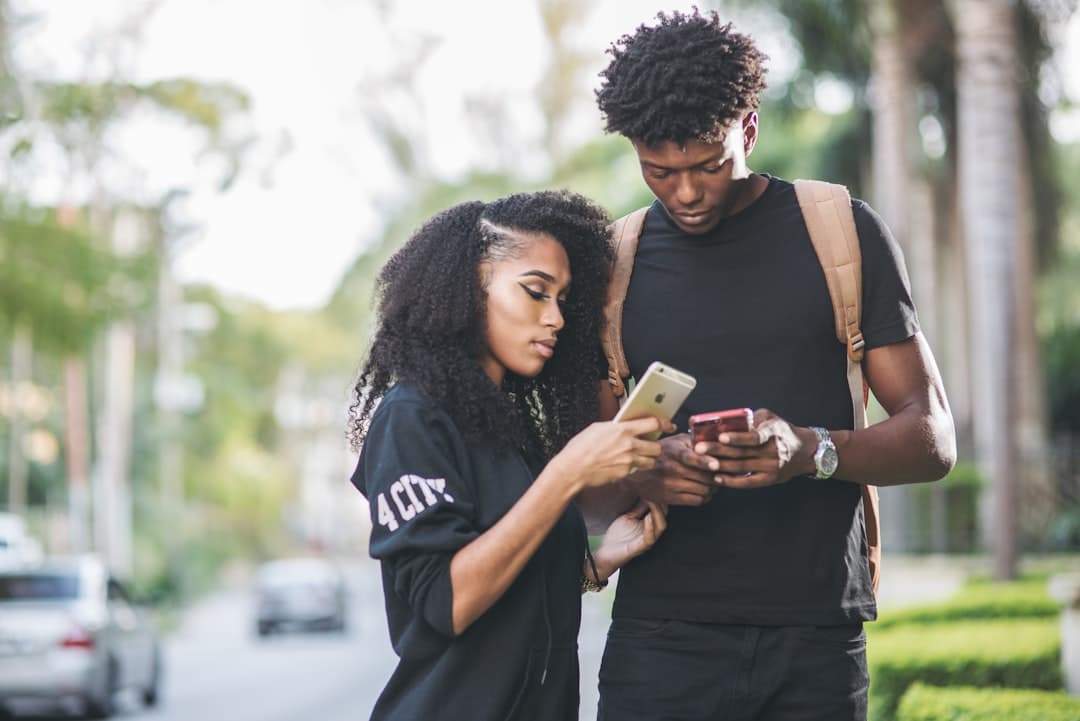
Every long distance couple eventually has the same fight. One person thinks they text too much. The other thinks they text too little. Nobody says it directly. Instead it leaks out as passive-aggressive replies, read receipts left hanging, and a slowly growing resentment that neither partner can quite name.
The problem is not texting itself. The problem is that most couples never agree on texting rules in a long distance relationship, so both people operate on unspoken expectations that inevitably collide.
Here is what the research actually says, what the common advice gets wrong, and the specific rules that keep couples connected without suffocating each other.
The key texting rules in a long distance relationship: Discuss expectations early, respond with presence instead of speed, use varied message formats (text, photos, voice notes), never argue over text, and agree on a "busy" signal so neither partner spirals when replies are slow.
What research says about texting in a long distance relationship
A 2021 study published in the Journal of Social and Personal Relationships surveyed 647 emerging adults. Among participants in long distance relationships, more frequent and responsive texting was associated with greater relationship satisfaction, while video-call frequency was not significantly associated with satisfaction.
The survey cannot establish that texting caused greater satisfaction or that texting is more important for every couple. It does suggest that responsiveness deserves more attention than a simple rule about message count.
Why? Because texting is where your ordinary life gets shared. A photo of the weird bird outside your office window. A quick "thinking of you" during a boring meeting. A three-word reaction to something your partner said yesterday. These micro-moments of connection accumulate into something that feels like presence, even across time zones and continents.
The keyword from the research is "responsive." It is not just about sending texts. It is about your partner feeling that when they reach out, someone is on the other end who genuinely cares. That responsiveness is what separates connection from content delivery.
For a deeper look at how communication works across distance, our guide on long distance relationship communication covers the full picture.
Texting rules in a long distance relationship that couples actually follow
There is no universal texting frequency that works for every couple. Some pairs text 100 messages a day and love it. Others check in twice and feel completely connected. The goal is not to hit a number. It is to agree on a rhythm that works for both of you.
That said, certain rules consistently show up among couples who make long distance work.
Have the conversation about expectations early
The single most important rule is also the most overlooked. Sit down (or hop on a call) and explicitly discuss what you both want from texting. How often? What kind of messages? How quickly do you expect a reply during the workday versus the evening?
This conversation takes five minutes. Skipping it creates months of silent frustration. One partner assumes a good morning text every day is the bare minimum. The other considers it optional. Neither is wrong, but the gap between their expectations breeds resentment when it goes unspoken.
Respond with presence, not just speed
Responsiveness does not mean replying within 30 seconds every time. It means that when you do reply, your partner can tell you actually read what they said. A follow-up question. A reaction to something specific. Even a simple "that's wild, tell me more later" signals engagement.
What kills connection is the one-word reply pattern. "Ok." "Nice." "Lol." Sent quickly but emptily. Speed without substance does not satisfy the need for closeness. Better to reply an hour later with something genuine than instantly with something hollow.
Use different text formats for different purposes
Not every message needs to be a deep conversation starter. Layer your texting to keep things varied:
- Quick check-ins for staying present: "Just finished lunch, how's your afternoon going?"
- Photos and voice notes for sharing your world: a sunset from your walk, a 30-second audio ramble about something funny that happened
- Intentional questions for building depth: try a daily question prompt from an app like FeelClose, which sends both partners a new question every day
This variety prevents the staleness that comes from texting the same "how was your day" exchange on repeat. If your conversations have gone flat, relationship questions can break the pattern.
Do not use texting for serious conflict
This rule is non-negotiable. Text strips away tone, facial expression, and the pacing of real conversation. What you intend as concerned comes across as accusatory. What you mean as playful reads as dismissive.
When something is bothering you, say so over text, but have the actual discussion on a call. "I want to talk about something that's been on my mind. Can we call tonight?" is a far better move than launching into a five-paragraph argument via iMessage.
Couples who fight over text tend to escalate faster and resolve slower. The medium works against resolution.
Give good morning and goodnight texts a trial run
These are not mandatory. Some couples swear by them as bookends to the day. Others find them performative.
Try them for two weeks. If they feel like a natural way to start and end the day, keep them. If they feel like an obligation, drop them. The point is that daily rituals should serve connection, not become another box to check. Our post on heart touching good morning messages for love has ideas if you want to make these messages feel less routine.
What not to text your long distance partner
Most advice focuses on what to send. Knowing what to avoid matters just as much.
Do not text to check up on them. "Where are you?" and "Who are you with?" are not connection. They are surveillance. If you find yourself needing to track your partner's location or social activity through texts, the issue is trust, not texting. Our guide on how to check loyalty in a long distance relationship explores healthier alternatives.
Do not text paragraphs of frustration without warning. If you have something heavy to share, flag it. "I need to talk about something important, can you give me your full attention?" This lets your partner mentally prepare instead of opening their phone to a wall of distress during a work meeting.
Do not use read receipts as a weapon. Reading a message and deliberately not replying to "teach them a lesson" is a manipulation tactic, not a communication strategy. If you need space, say so. "I need a little time to think before I respond" is honest. Silence as punishment is not.
Do not send tests. Vague messages designed to see how your partner reacts ("I have something to tell you..." then going silent) create unnecessary anxiety. Be direct. Being mature in a long distance relationship means saying what you mean without making your partner decode riddles.
When texting anxiety takes over
Here is something almost nobody writes about in LDR texting advice: the anxiety spiral.
Your partner usually replies within 20 minutes. Today it has been three hours. You check if your message delivered. You look at their social media to see if they are active. You draft a follow-up text, delete it, draft another one. Your stomach tightens. Your brain starts generating worst-case scenarios.
This is texting anxiety, and it is remarkably common in long distance relationships. The problem is that your brain applies face-to-face social rules to an asynchronous medium. In person, three hours of silence after you say something would be alarming. Over text, it usually means your partner got busy, fell asleep, or left their phone in another room.
A few things that help:
Agree on a "busy" signal. Something simple like a quick "slammed at work, talk later" eliminates hours of wondering. It takes five seconds to send and saves your partner from an anxiety spiral.
Notice your patterns. Does the anxiety spike at certain times? When you are already stressed about something else? When your partner mentioned plans with friends? Awareness does not eliminate the feeling, but it lets you catch the spiral before it reaches full speed.
Separate the feeling from the story. You feel anxious. That is real. The story your brain constructs ("they're losing interest," "they're with someone else") is not a fact. It is your anxiety looking for a narrative. Naming the difference out loud helps: "I feel anxious because I haven't heard back. That does not mean anything is wrong."
If anxiety around texting is persistent, it may be tied to your attachment style. Partners with anxious attachment tend to over-monitor response times, while partners with avoidant attachment tend to under-communicate. Neither pattern is a character flaw. Both can be worked on. Our post on how to deal with a long distance relationship goes deeper on managing these dynamics.
Small details that make a big difference
Research on digital communication keeps surfacing surprising findings. A 2025 study published in PLOS One found that using emojis in text messages significantly increased perceived partner responsiveness. In other words, the same message with a smiley face at the end made recipients feel more heard and understood than the same words without one.
This is not about littering your messages with hearts and winking faces. It is about recognizing that text communication lacks tone, and small cues like emojis, exclamation marks, or a quick "haha" fill in gaps that would otherwise be filled by your voice and facial expressions. "Sounds good" reads neutral to flat. "Sounds good!" reads warm. The difference is tiny on screen and significant in impact.
Other small things that matter:
- Reference earlier conversations. "How did that presentation go?" or "Did you end up trying that restaurant?" shows you are paying attention to their life, not just responding to what is in front of you.
- Send things you find during the day. A meme, a song, an article. These are what Dr. John Gottman calls "bids for connection", and couples who respond to each other's bids 86% of the time stay together at dramatically higher rates.
- Mix up your medium. A 45-second voice message carries warmth that text cannot. Use it when you want your partner to hear your laugh, your excitement, or just the sound of your voice.
Frequently asked questions
How often should you text in a long distance relationship?
There is no single correct frequency. Some couples thrive on dozens of messages a day, while others feel connected with just a morning and evening check-in. What matters more than frequency is consistency and responsiveness. The best approach is to have a direct conversation with your partner about what feels right for both of you, then revisit that agreement every few months.
Is it bad to text all day in a long distance relationship?
Not necessarily. If both partners enjoy constant communication and it does not interfere with work or other responsibilities, frequent texting can strengthen the bond. It only becomes a problem when one person feels obligated to reply constantly or when texting replaces all other forms of communication like calls and video chats.
What should I do when my long distance partner stops texting back?
Resist the urge to send multiple follow-up messages. Give them a reasonable window of time, then send one calm check-in. If the silence is unusual, a brief "Hey, haven't heard from you today, just checking in" is appropriate. Avoid jumping to conclusions. Most delayed replies have boring explanations: a busy day, a dead phone battery, or simply falling asleep.
Should long distance couples have a goodnight text rule?
Only if it feels natural to both of you. Some couples find that bookending the day with a morning and goodnight message creates a comforting routine. Others feel it turns into a chore. Try it for a couple of weeks and check in with each other. If it starts to feel forced, let it go and find a different ritual that works better.
Make the rules, then revisit them
The best texting rules are the ones you build together and update as your relationship changes. What worked in the first month of long distance probably will not work in month eight. Check in every few months: Is our texting rhythm still working? Do we need more? Less? Different?
If you want a built-in structure for daily connection that goes beyond texting, FeelClose gives you and your partner a new question every day, a countdown to your next visit, and quick nudges that take seconds but signal "I'm thinking about you." It is not a replacement for texting. It is the thing that makes your texting more interesting because you always have something real to talk about.
The distance is hard enough. Your texting should make it easier, not harder.
Stay Connected with FeelClose
The relationship app for long distance couples. Countdown to visits, send nudges, answer daily questions, play nine couple games, and raise a little pet together.
Download Free on iOSFeelClose for Android is coming soon
Get an email the day it’s on Google Play.